
One of the saddest and most common cases I see as an ER vet is a dog attacked by another dog while on a walk with its guardian.
It’s just so upsetting… One minute these dogs are out enjoying their evening walk and the next minute they are in the ER with horrific bite wounds. I’ve seen so many toy breed dogs lose their lives this way. And the dog guardians are left with only trauma-filled memories and no dog. It’s unthinkable. Today, I’m going to give you tips to help keep you and your dog safe on walks. Please share the heck out of this one in hopes of saving precious lives and preventing guardians from going through this awful experience.
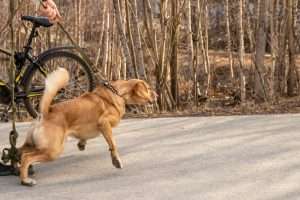
- Don’t Let Your Dog Meet Other Dogs on Walks
The best way for dogs to meet each other is by parallel walking followed by being loose in an enclosed area. Dogs attached to owners by leashes often feel protective or defensive leading to aggressive behavior even in the best of dogs.
- Pick up Your Dog
If you have a small enough dog, scoop him up immediately when you see a dog approaching. Often the dog will not approach the human as easily as he would the small, defenseless dog. - Be forthright
Be prepared to say whatever you need to say to get the other dog guardian to take you seriously. You may have to say, “My dog is aggressive please keep your dog away” in order to get them to listen. Dog guardians don’t always have common sense when it comes to their dogs. Many think it’s appropriate for their dog to get to meet every dog on the walk. - Get Out of There
If you see an off-leash dog that’s approaching you, turn around and get out of there quickly without running. Often just crossing the street or getting behind parked cars or a tree will do the trick. Try not to run since that might entice the dog to give chase. Just turn around and get out of there. - Throw Treats
Many dogs will be distracted by food. This trick has the bonus effect of making the dogs like you more, potentially avoiding future issues. - Yell and wave your hands
Yell and act like a crazy person! Not only will this hopefully deter the oncoming dog but will get the attention of others who may be able to help. Maybe even the dog’s irresponsible guardian will come to get their dog. It’s surprising how often you can stop an oncoming dog with some yelling and arm-waving. Use this technique with caution because it may cause your own dog to react and develop bad habits and reactivity around all dogs. - Throw things
Pick up the nearest rock, stick, or if you have a ball, and then throw it straight at the oncoming dog.
- Aim a Kick
If nothing else is working, a kick toward the dog may help deter him and save your dog. Aim for the mid-abdomen or face. Be careful though because this may lead to your leg getting bit. - Listen To Your Gut- If you see a dog in the distance that is loose or appears to be a threat turn around and avoid it. If a guardian wants your dog to meet their dog and you feel it’s a bad idea then don’t do it just to be polite. Too often we talk ourselves out of our instincts which we usually end up regretting.
- Carry Protection
Consider carrying something that is non-lethal but will effectively deter dogs from attacking you or your dog.
Consider carrying something that is non-lethal but will effectively deter dogs from attacking you or your dog.
Here are some options:
- Spray Shield Citronella Spray
This is a citronella dog-repellent spray from PetSafe. Citronella tastes and smells terrible to dogs, but it doesn’t burn as badly or as long as pepper spray.
- Safety-sport Dog Horn
This is a small, compact air horn that can easily be taken on walks or jogs. Loud sounds are generally pretty scary to dogs – and a loud enough sound will stop most oncoming dogs in their tracks. This air horn has a surprisingly long shelf life and can be used multiple times.
- Halt Dog Repellent
This uses Capsaicin, which makes it a true pepper spray. This pepper spray can really hurt – even if you just get a bit on your hands when you spray or blow back in the wind. Like the other tools on this list, this is a pretty straightforward point-and-shoot repellant spray. It’s small enough to fit in some pockets and comes with a belt clip.
When it is appropriate to use dog repellant spray on dogs:
- The dog is off-leash and out of the owner’s control.
The owner might be absent, ignoring the dog, or being ignored by the dog.
- The dog is coming right at you.
Obviously don’t spray an off-leash dog that’s not bothering you.
- The dog does not appear friendly.
If a dog comes trotting over with loose, sweeping tail wags and an open-mouthed grin, I wouldn’t spray him. But if the dog is barking, lunging, charging, or moving quickly and silently with stiff body postures, you’re going to want to keep him away. A high tail wag does not mean the dog is friendly…be more concerned about how stiff his movements are and how forward his posture is (the stiffer and more forward, the worse it is).
- Your dog is reactive.
If a nice dog approached your reactive dog then you might have to spray him to prevent a fight. However, try other methods of deterring him before resorting to this.
- First-line methods didn’t work.
Always try another method such as yelling, waving arms, or throwing treats before spraying the dog – unless the body language and speed tell you that there isn’t time.
Using deterrent spray seems straightforward, but I recommend practicing with your spray first before hitting the trail. You want to know that you can use the spray quickly and under stress! Some sprays have pins, need to be rotated, or otherwise not so easy to use.
For best results with dog deterrent spray:
- Aim away from you.
It’s shockingly easy to spray some of these canisters the wrong way. - Aim downwind.
If you spray into the wind, the pepper spray, in particular, is likely to end up on you. That hurts! Citronella spray is less offensive but still not fun. - Aim for the dog’s face, mouth, and nose.
Both pepper spray and citronella spray work best on mucus membranes. - Use earlier if possible.
While you want to be somewhat conservative using sprays, you don’t want to try to spray a dog that’s already attacking your dog or just a few inches away from you. Try to spray the dog when he’s still several feet away.
Report all encounters. If possible take a video of the dog that tried to attack so that you can help prevent it from happening to others.
Walking your dog should be one of the most peaceful, enjoyable experiences you can share. You shouldn’t have to worry about other dogs and their irresponsible dog guardians. But unfortunately, to stay safe you must be prepared for this just in case. Have a plan of action so that you do not get caught off guard and can keep both you and your dog safe.