
When used appropriately, essential oils can make a positive impact on your dog’s health and well-being in a variety of ways. Some benefits of essential oils include decreased anxiety, pain relief, mood elevation, and protection against fleas, ticks, and mosquitoes. Many oils also have anti-inflammatory and antibacterial effects. One study at Johns Hopkins found that certain essential oils could even kill a type of Lyme bacteria better than the most effective antibiotic. However, if misused, essential oils can cause your dog harm.
In this article, we will cover:
- What exactly are essential oils?
- How and when to use them.
- How to choose quality essential oils.
- Recipes to add to your dog’s wellness plan
- How to prevent harm from essential oil use.
Essential Oils Defined
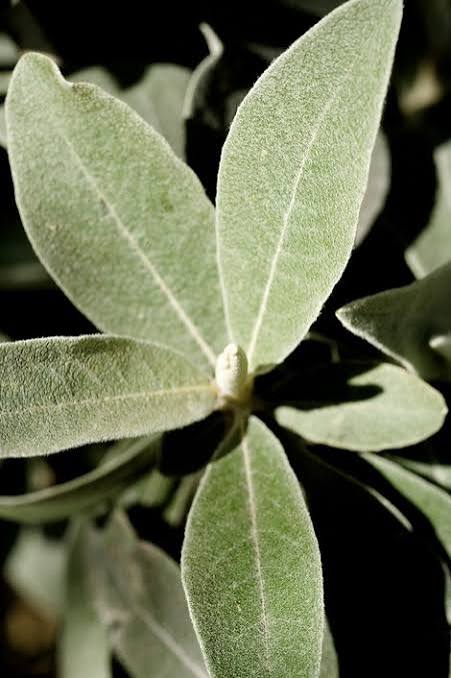
Two kinds of oils are derived from plants: fixed and essential oils. Fixed oils (or natural oils) are mainly sourced from the seeds, whereas essential oils (or volatile oils) are highly concentrated extracts from the plant’s leaves, roots, petals or bark through steam distillation.
They have a wide range of medicinal and therapeutic properties. Their antifungal, antibacterial, and antiviral properties make them a valuable product to add to your dog’s wellness plan. Multiple USDA studies have recently provided evidence to support the use of the plant-derived chemicals as immune-enhancing and antimicrobial agents in farm animals.
What Is Aromatherapy?
Aromatherapy has been used for centuries as the practice of using essential oils for therapeutic benefit. When inhaled, the scent molecules in essential oils travel from the olfactory nerves directly to the brain and especially impact the amygdala, the emotional center of the brain.
Why We Need Carrier Oils?
A carrier oil is used to dilute your oils by separating them into tiny particles. Carrier oils “carry” essential oils to your skin in a way that avoids irritation.
Whenever possible, purchase organic, cold-pressed carrier oils from a manufacturer you trust.
If anyone in your family is allergic to tree nuts, then avoid oils derived from tree nuts such as, sweet almond oil, argan oil, and apricot kernel oil.
Examples of carrier oils:
- Sweet almond
- Sesame
- Jojoba
- Rosehip
- Avocado
- Apricot kernel
- Olive oil
- Argan oil
Always store carrier oils in a cool, dark place, preferably in the refrigerator. You should also keep them in a dark glass bottle.
How To Dilute Essential Oils
I recommend a 0.5% to 1% dilution. This means you add only 3 to 6 drops to an ounce of a carrier oil. This can then be further diluted by adding distilled or filtered water depending on the recipe.
Administration Routes of Essential Oils
Options for using essential oils for your dog:
- Direct inhalation
- Atomizer diffuser
- Mist sprays
- Topical
Start with a very small amount on a tissue or bandana and watch closely for signs of discomfort or dislike from your dog. Signs such as turning away, avoidance, panting, whining or rubbing his face on things means that is not a good choice of essential oil for your particular dog.
I personally use diffusers in the house and also make my own essential oil mixtures in a spray to place on a bandana when needed. I use them for the purposes of calming and flea & tick prevention. I like the bandana idea because I can easily remove it after walks or if my dog seems irritated by the oils.
How To Choose Quality Essential Oils
- Purity: Find an oil that contains only aromatic plant compounds, without additives or synthetic oils. Pure oils usually list the plant’s botanical name (such as Lavandula officinalis) rather than terms like “essential oil of lavender, essence oil or fragrance oil.”
- Quality: True essential oils are the ones that have been changed the least by the extraction process. Choose a chemical-free essential oil that has been extracted through distillation or mechanical cold pressing.
- Reputation: Purchase a brand with a reputation for producing high-quality products.
Specific Treatments and Recipes
The treatment uses I’m discussing here are:
- Calming your dog to prevent or manage anxiety and fear.
- A key part of your flea and tick prevention protocol.
- Reducing pain, especially related to arthritis, to improve your dog’s quality of life.
Storage
Always use dark glass bottles. Never use plastic, because the oils can disintegrate the plastic and leach harmful toxins into the oil blend. Never use transparent, see-through glass since essential oils are fragile and degrade under heat and light. Glass bottles come with sprays or dropper lids.
Essential Oil Recipes For Anxiety & Fear

These are also helpful for separation anxiety. If you are using it while you are out then I suggest using a diffuser.
Start with 2 ounces of a Carrier Base of either:
- Jojoba
- Lavender Hydrosol for a spray mist
- Rosehip
- Avocado
- Apricot kernel
- Olive oil
- Argan oilThen Add The Essential Oils…
Recipe #1
- 2 ounces of a carrier base
- 4 drops of Neroli essential oil
- 3 drops of Petitgrain essential oil
- 2 drops of Lavender essential oil
Recipe #2
- 2 ounces of a carrier base
- 2 Drops of Lavender essential oil
- 3 Drops Valerian essential oil
- 2 Drops Clary Sage essential oil
- 2 Drops of Marjoram essential oil
Recipe #3
Gentle Aromatherapy Recipe for mild anxiety or dogs particularly sensitive to aromas.
- 2 ounces of a carrier base
- 2 Drops Roman Chamomile essential oil
- 4 Drops of Rosemary essential oil
Recipe #4
Soothing Aromatherapy Recipe. I use Geranium when I’m anxious, and I love it.
- 2 ounces of a carrier base
- 2 Drops Spikenard essential oil
- 3 Drops Damask Rose essential oil
- 4 Drops of Geranium essential oil
Calming Shampoo Recipe
You can also make your essential oil-calming shampoo
- 4 drops of lavender essential oil
- 2 tbsp Castile soap ( I use this one )
- 4 drops peppermint essential oil
- 400 ml of water
- 4 drops of eucalyptus essential oil
- bottle to store your shampoo
Instructions:
- Mix the essential oils into the castile soap and stir well.
- Add the oil and soap mixture to your bottle
- Add the water
- Shake the bottle each time you use the shampoo.
- Lather well, leave on for 5 minutes and rinse well.
Flea & Tick Prevention Recipes
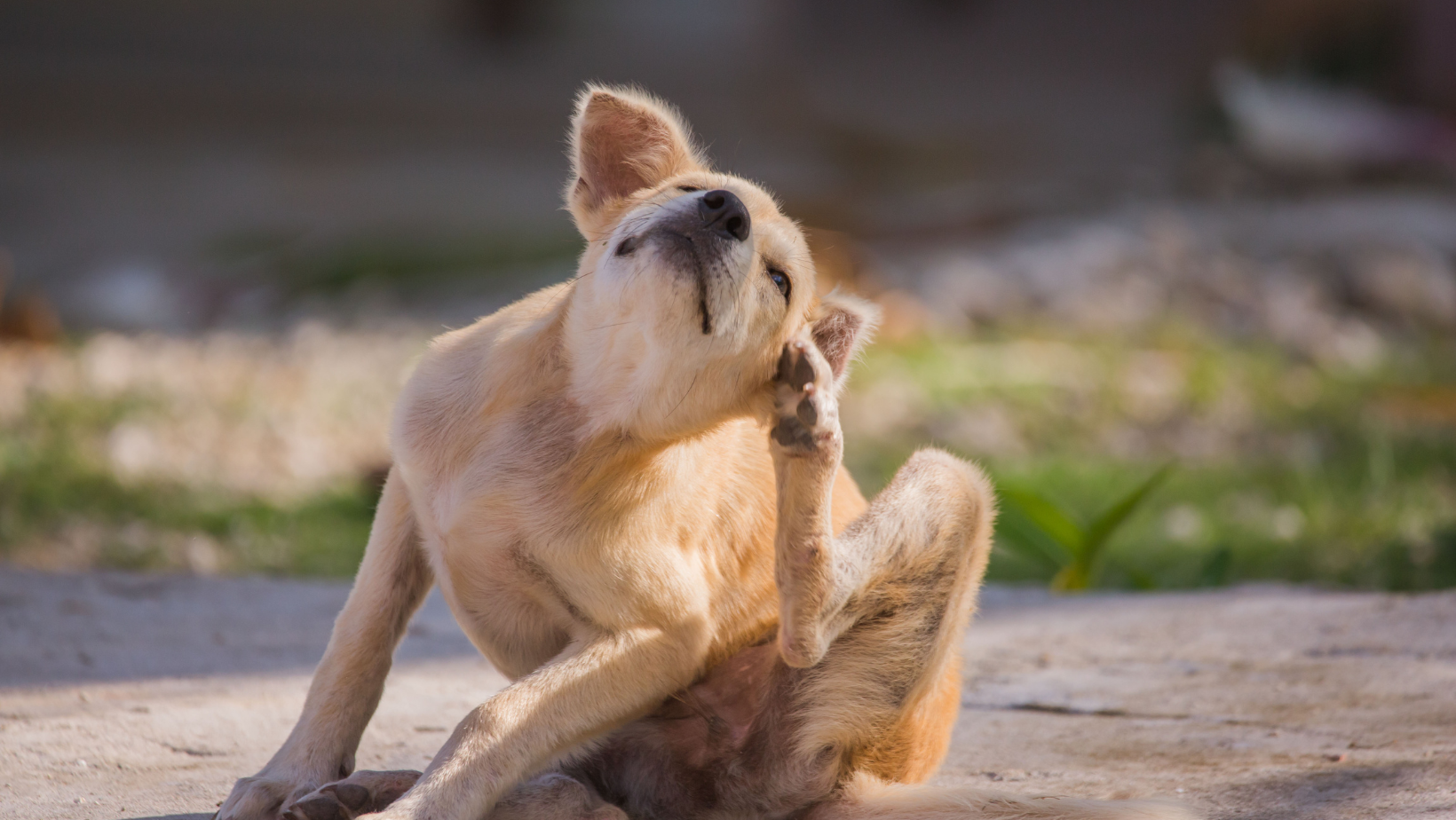
 I spray these on a bandana that I use for walks. You can also use these to spray directly on the coat, but be sure to avoid eyes, nose and mouth.
Several essential oils have insect-repellent properties, including:
- Verbena
- Lavender
- Pine
- Catnip
- Rosemary
- Basil
- Lemon balm
- Lemon eucalyptus oil
- Peppermint
- Cedarwood
- Lemongrass
Start with 2 ounces of a Carrier Base. Choose from the list above.
Then Add the Essential Oils as follows…
Recipe #1
Summer Blend Recipe – Mix gentle Cardomom with Citronella for a restful summer blend to help keep the mosquitoes away.
- 2oz carrier oil
- 24 Drops of Cardamom essential oil
- 2 Drops Citronella essential oil
Recipe #2
Flea-Free Essential Oil Blend – Do Not Spray directly on the face; avoid eyes.
- 2 oz carrier oil
- 3 drops clary sage essential oil
- 1 drop of citronella essential oil
- 5 drops peppermint essential oil
- 2 drops of lemon essential oil
Recipe #3
Goodbye, Fleas & Ticks Blend – Do Not Spray directly on the face; avoid eyes.
- 2 oz carrier oil
- 8 oz distilled water
- 4 oz apple cider vinegar
- 10 drops of Neem oil
- 10 drops cat nip oil
Recipe #4
Tick Spray – Do Not Spray directly on the face; avoid eyes.
- 2oz carrier oil
- 6 oz distilled water
- 1 tsp vegetable glycerin
- 3 tsp (1/2 ounce) grain alcohol or vodka
- 4 drops of grapefruit seed essential oil
- 2 drops of geranium essential oil
- 2 drops of rosewood essential oil
- 3 drops lavender essential oil
- 2 drops Opoponax essential oil
- 1 drop bay leaf essential oil
- 6 drops turmeric essential oil
Commercial products that I use and love are Wondercide and Cedarcide.
Essential Oils for Dog Arthritis

Essential oils have effectively eased canine joint discomfort due to their anti-inflammatory properties.
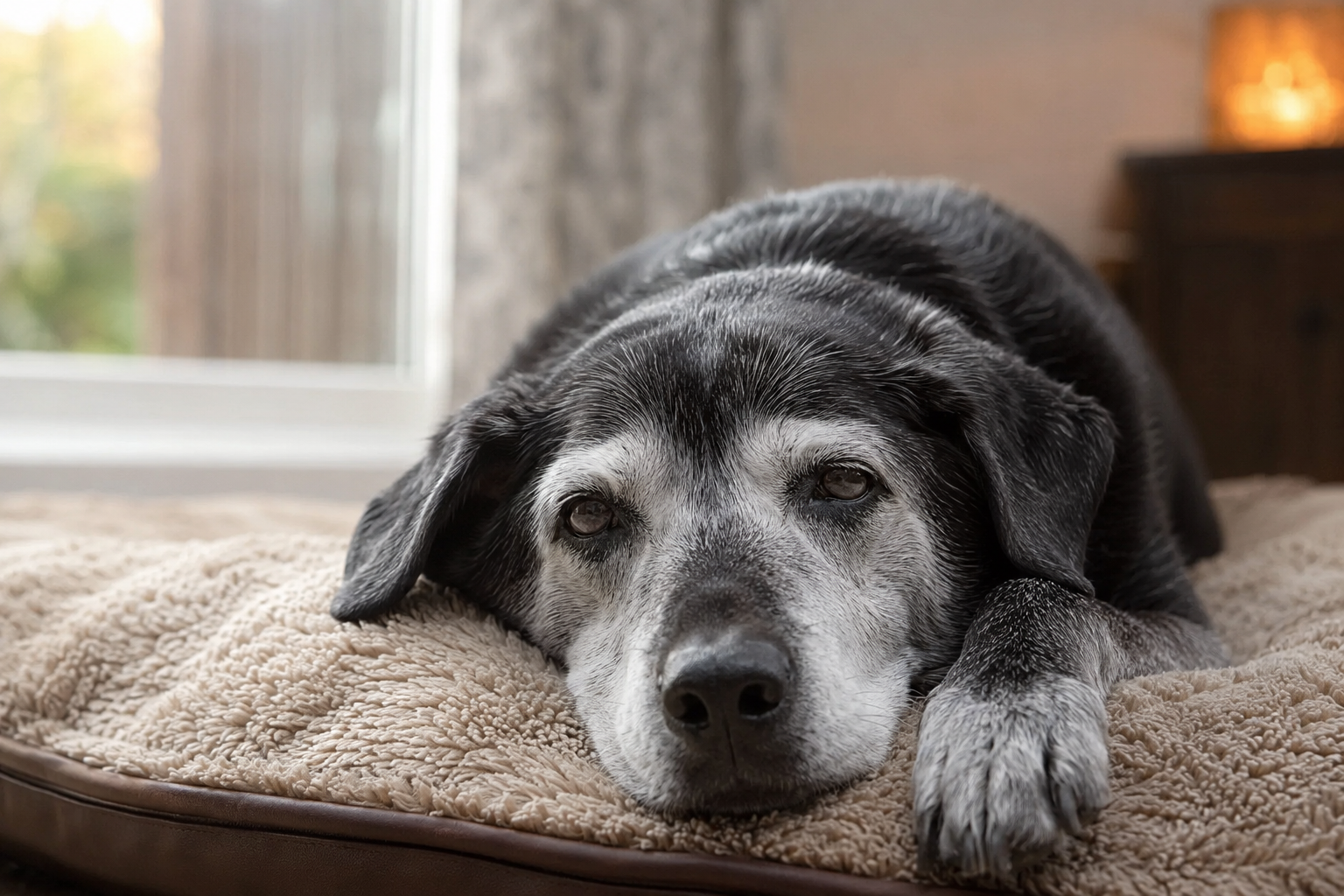
Black Spruce, Balsam Fir, Peppermint, Bergamot, Lavender, Anise, German (Blue) Chamomile, Marjoram and Copaiba have all been used with dogs for arthritis.
Recipe #1
Arthritis fix
- 60 ml carrier oil
- 4 drops of helichrysum essential oil.
- 2 drops peppermint essential oil.
- 3 drops of ginger essential oil.
- 3 drops of valerian essential oil.
Recipe #2
Calming pain relief remedy
- 60ml carrier oil
- 4 drops of lemon essential oil.
- 3 drops lavender essential oil.
- 4 drops of ginger essential oil
A commercial blend I like is by Pet Alchemist aromatherapist Joan Clark makes a massage blend for acute pain relief that she calls “Arf-itis,” containing angelica, arnica, wintergreen, marjoram, peppermint, and tansy essential oils, in a base of arnica-infused oil, St. John’s wort, jojoba, fractionated coconut oil, flower essences, and lavender hydrosol.
Risks Of Essential Oil Use
- Not all oils are created equal. Low-quality oils (or worse, oils with added “scents”) are not much better than harsh synthetic chemicals and pesticides. Look at my discussion of choosing quality essential oils below.
- Oils can harm dogs if misused. When applied full strength to the skin or fur, oils can cause skin irritation or even burn sprayed, irritating the dog’s sensitive nose, mouth or eyes. Ingested undiluted oils can irritate the lining of the mouth, throat, stomach and intestines. Prolonged ingestion can lead to nausea, vomiting and eventually kidney and liver damage.
- Symptoms of toxicity include diarrhea, excessive drooling and lethargy.
- Don’t apply essential oils to the nose, muzzle, near eyes or genital areas.
- Do not add essential oils to your dog’s water. Water and oil do not mix; your dog will ingest undiluted oil from the surface.
- Use caution when your dog is on chronic medications because essential oils can interact with conventional medicine.
- Another concern with essential oils is the risk of aspiration and aspiration pneumonia. Because of the viscosity of oils, dogs can get the oil in their lungs when ingesting it, and the fat can also be aspirated if it is vomited back up. For this reason, it is never recommended to induce emesis with accidental ingestion of oil products and immediate veterinary care is needed with these types of exposures.
- The most common essential oil toxicities reported in dogs are Melaleuca or Tea Tree Oil, Pennyroyal, Oil of Wintergreen, and Pine Oils.
Prevention is vital to limiting essential oil toxicities in dogs. It is important to know and understand the dangers of essential oils and how to use them safely before adding them to your dog’s treatment plan.
To Sum It Up
When used correctly, essential oils can be an excellent addition to your wellness plan for your dog. The benefits redeemed by using essential oils can elevate your dog’s life.
As an empowered guardian, you can make informed health decisions for your dog that lead to vitality and longevity. Essential oils are one aspect that can be a crucial ingredient in your plan for keeping your dog calm, pain-free and protected from ectoparasites. The antimicrobial and antiviral properties can also help avoid and treat infections. You may even add essential oils to your wellness plan.