
Introduction
Bladder stones, medically termed uroliths or calculi, present a significant challenge for dogs and their owners alike. These stones can irritate the bladder lining, leading to bleeding, pain, and an increased risk of chronic bladder infections. When stones block the urinary tract, they pose a serious, potentially life-threatening problem, especially in male dogs with narrower urethras.
These stones form when there are lasting changes in urine composition, leading to an excess of certain substances that clump together and grow into stones.
Types of Stones
Most canine uroliths, or bladder stones, fall into six categories depending on their mineral composition:
- Magnesium ammonium phosphate (also called struvites)
- Calcium oxalate
- Ammonium urate or uric acid
- Cystine
- Calcium phosphate
- Silica
The most common types are struvite and calcium oxalate stones, making up about 80% of dogs. In this blog, we will touch on the two most common stones found in dogs: struvite and calcium oxalate.
Symptoms of Bladder Stones
- Difficulty urinating – straining, lack of urinating
- Pain when urinating
- Urine leakage or odor
- Urinating small amounts frequently
- Incontinence, urinary accidents
- Blood in urine
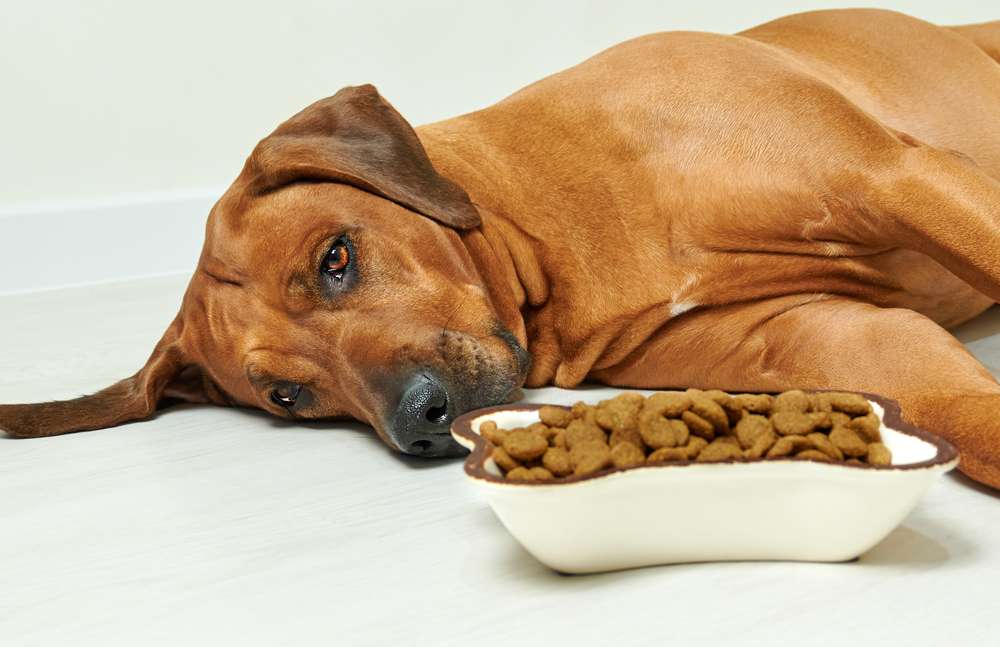
- Lethargy
- Reduced appetite and vomiting may occur due to urinary blockage
- Licking the urinary opening
- Abdominal pain
- Fever
Diagnostic Testing
- Urinalysis: urinalysis is an important first step however, it can’t always detect a bladder infection. Urinalysis may appear normal as frequently as 20 percent of the time when in fact a urinary tract infection is present.
- Urine Culture & Sensitivity: This process will confirm the diagnosis of infection and identify the most effective antibiotic for treatment. Administering an ineffective antibiotic not only hinders proper treatment, but also fuels the proliferation of drug-resistant bacteria while needlessly negatively affecting the gut microbiome.
- Radiographs: CaOx uroliths and struvite stones are radiopaque and most are easily seen on radiographs (X-rays).
- Stone Analysis and Stone Culture– both of these should be performed if your dog undergoes stone removal.
Struvite Stones
About 85 percent of all struvite stones are found in female dogs, and only 15 percent are found in males. Struvite stones develop when there’s too much magnesium, ammonium, and phosphorus in the urine, with dietary magnesium possibly contributing. These stones tend to form in urine with a high pH (alkaline). Struvite stones usually form when large amounts of crystals are present in combination with a urinary tract infection from urease-producing bacteria such as Staphylococcus or Proteus. Although rare, sterile struvite uroliths have been reported, particularly in certain breeds like English Cocker Spaniels.
A plan for medical dissolution consists of achieving an acidic urine pH, increasing urine volume (increasing water intake), and feeding a diet low in magnesium and phosphorus.
Antimicrobial agents: these are crucial during dissolution to combat bacteria trapped in the stones. Continuation of antimicrobial therapy throughout dissolution is vital to prevent recurrent urinary tract infections. The average dissolution time ranges from 8 weeks for infection-induced struvite stones to 2-4 weeks for sterile struvite uroliths.
Urine pH: Adding a urinary acidifiers (DL-methionine at 100mg/k every 12 hours): This is a commonly used urinary acidifier that helps lower urine pH by providing sulfur, which is metabolized into sulfuric acid in the body) and appropriate antibiotics is effective in dissolving struvite stones in over 80% of cases in dogs.
DIET: Low-protein “prescription” diets are commonly used to dissolve struvite stones in dogs, often alongside antibiotics. While effective temporarily by reducing urea, a key component in struvite formation, these diets are not suitable for long-term use due to potential nutritional deficiencies in adult dogs and should be avoided in puppies. Instead, I recommend a meat-based, fresh diet over highly processed options, as it provides higher-quality nutrition better suited to a dog’s needs.
A raw or gently cooked meat based diet with other acidic foods is recommended.
Calcium Oxalate Stones
Calcium oxalate uroliths are common in dogs, accounting for 30-50% of canine uroliths, and occur more often in males. In one study, 68-71% of calcium oxalate uroliths submitted to two urolith centers were from male dogs.
Predisposed breeds include the miniature schnauzer, Lhasa apso, Yorkshire terrier, bichon frise, pomeranian, shih tzu, Cairn terrier, Maltese, miniature poodle, and chihuahua. Bichon Frise seems to have 20 times the risk of oxalate stone formation compared to other breeds.
Hyperadrenocorticism and obesity are also identified as a risk factor for calcium oxalate formation in dogs.
DIET: To manage oxalate levels in a dog’s diet, it’s crucial to feed low-oxalate foods while avoiding those high in oxalates.
Potassium citrate: Potassium citrate can help prevent calcium oxalate uroliths. Citrate forms a soluble salt with calcium, inhibiting calcium oxalate crystal formation. It also helps to alkalinize the urine. The starting dosage of 50-75 mg/kg PO q 12 hours is then titrated to achieve a urine pH of approximately 7-7.5.
Thiazide Diuretics: Thiazide diuretics can be beneficial for patients with recurrent calcium oxalate urolithiasis if hypercalcemia is not present. Two to four weeks after potassium citrate is added to the therapeutic diet, a urine sample should be checked. If the urine is not adequately diluted, water consumption will have to be further increased (additional fresh, filtered water bowls, bone broth, and a hydrating diet). If urinary pH is less than 6.5 or if oxalate crystals are seen, it is time to consider Thiazides. Thiazides enhance renal tubular reabsorption of calcium and promote diuresis. A 55% decrease in urinary calcium concentration was reported in urolith-forming dogs that were treated with hydrochlorothiazide at 2 mg/kg PO q 12 hrs.
Vitamin B6 increases the metabolism of glyoxylate, a precursor of oxalic acid, to glycine, thereby decreasing urinary oxalate excretion. One study in adult calcium oxalate-forming dogs showed lower plasma B6 levels when compared with non-urolith-forming dogs.
Probiotics: Probiotics can potentially help prevent the formation of oxalate bladder stones by promoting a healthy balance of gut bacteria. Some strains of bacteria found in probiotics, such as Oxalobacter formigenes, have been shown to break down oxalate in the intestines, reducing its absorption into the bloodstream. By decreasing the amount of oxalate available for excretion in the urine, probiotics may lower the risk of oxalate crystal formation in the bladder. Additionally, probiotics can help maintain overall gut health, which may indirectly influence urinary health and reduce the risk of stone formation.
Avoid These Medications: Some medications can increase the risk of calcium oxalate stone development, and these should be avoided. Prednisone and other cortisone-type medications should be avoided if possible. Furosemide (brand name: Lasix or Salix) is a diuretic mostly used in the treatment of heart failure. Both these medications lead to excess calcium in the urine. Supplementation with Vitamins D or C also increases the risk of forming oxalate stones; such supplementation should be discontinued.
General Treatment for Bladder Stones
It is critical to identify the type of stone accurately because different stones require entirely different treatments (often opposite treatments). Removing the stone and having it evaluated at the lab is necessary for definitive diagnosis; however, there are parameters we can utilize to make our best guess on the probability of the type of stone, such as urinary pH, the dog’s age, breed, and sex, radiographic density (how well the stones can be seen on x-ray-calcium oxalate will be more dense), whether an infection is present and certain blood test abnormalities.
Water, Water & More Water!
According to Dennis J. Chew, in a paper delivered at the 2004 Small Animal Proceedings Symposium of the American College of Veterinary Surgeons, “Water may be the most important nutrient to prevent recurrence of uroliths. Increased water intake is the cornerstone of therapy for urolithiasis in both human and veterinary medicine. Increasing water intake to dilute urine and increase the frequency of urination is an important part of treatment. Decreasing the concentration of potential stone-forming minerals in urine and increasing the frequency of voiding are the key elements of therapy to reduce the risk of formation of a new urolith.”
Some ways that you can increase your dog’s water intake include making sure that plain, fresh, filtered water is available at all times and in several rooms of the house. You can add bone broth to water or to their food to encourage increased fluid intake. A hydrating diet is the most important way to increase water intake.
It is just as important to give your dog the opportunity to urinate often throughout the day. Stones and crystals form in highly saturated urine, which can occur when dogs have to hold their urine for long periods. The higher the concentration of urine, the greater its saturation with minerals that may precipitate; thus, additional fluids, which dilute the urine, decrease the risk.
When To Consider Surgery
Recurring Urinary Stone Formation and Subsequent Urinary Blockages Despite Proper Management (not just placing them on an ultra-processed, kibble, “prescription” diet).
- Voiding Urohydropropulsion (VH): VH can remove small stones by inducing voiding and encouraging passage through the urethra. Sedation or anesthesia is recommended. The bladder is distended with sterile saline, and agitation helps stones settle into the bladder trigone. VH is most effective for stones under 5 mm in dogs over 8 kg.
- Cystoscopic Retrieval: Small stones or fragments can be removed through transurethral cystoscopy. A urolith basket may be used to snare smaller stones. Percutaneous cystolithotomy is another minimally invasive option.
- Laser Lithotripsy: A laser is used to fragment stones via cystoscopy. Success rates vary but can be high, especially for female dogs.
- Extracorporeal Shock Wave Lithotripsy (ESWL): Shock waves are used to fragment stones outside the body. Best for immobile stones like nephroliths (kidney stones) and ureteroliths (stones in the ureter-the tube from the kidney to the bladder).
- Retrograde Urohydropropulsion (RU): Uroliths are flushed into the bladder for removal via other methods. Anesthesia is typically required.
- Surgical Removal: Stones may be removed via cystotomy, ureterotomy, or urethrotomy. Complications can include stricture formation and urinary leakage.
Anatomical Anomalies
One example is a recessed vulva which refers to a condition where the vulva is positioned inward or tucked within the surrounding skin folds, rather than being prominently visible. This anatomical anomaly can predispose the dog to recurrent urinary tract infections due to inadequate ventilation and moisture buildup in the area. A recessed vulva is common in females who are spayed prior to their first heat. A corrective surgery called a vulvoplasty can decrease or eliminate the recurring UTIs that lead to struvite stone formation. Wiping your dog clean after each urination can help avoid this surgery.
Urethrostomy: Unfortunately, I have seen patients who continue to form oxalate stones no matter what is done. In rare cases, a more invasive surgical procedure is sometimes considered in male dogs that repeatedly develop urinary blockages despite all efforts to prevent oxalate stone formation. This procedure is called a urethrostomy. This involves creating a new urinary opening near the scrotum. By doing this, urine exits earlier in its path, bypassing the penis opening. This flexibility, combined with the larger opening, helps smaller stones pass through without getting stuck in the penis opening.
Prevention
Struvites:
To prevent the formation of future struvites, the most effective methods appear to be urinary acidification (at a pH below 7.0), increased fluid intake and ample opportunity to urinate in order to avoid supersaturated urine.
Dietary starch and fiber potentially stimulate the formation of struvite crystals, so reducing dietary carbohydrates helps prevent struvite urolith formation.
Calcium Oxalates:
Calcium oxalate uroliths are recurrent; therefore, preventative measures are warranted. There is an approximate 10% recurrence at 6 months and 35% recurrence at 12 months. The goal of prevention is to lower the amount of calcium oxalate by decreasing urinary levels of calcium and oxalate and by increasing urine volume in order to dilute the minerals. It is recommended to feed a diet that is mineral-restricted, hydrating, and alkalinizing.
Recurrence
Failing to eradicate the original infection and prevent new bacterial infections is the main reason that struvite uroliths recur. The risk can be significantly reduced through increased rechecks, urinalysis/urine culture monitoring, and appropriate antimicrobial treatment based on culture results.
Calcium oxalate bladder stones have a recurrence rate of about 8-9% within 6 months, increasing to 35-36% within a year and approximately 50% within 3 years. Interestingly, miniature schnauzers face three times the risk of recurrence compared to other breeds. It’s important to schedule regular urinalysis with sediment examination to keep tabs on urine pH and urine specific gravity. Aiming for a pH of 7-7.5 and urine specific gravity of <1.020-1.030 is helpful in reducing recurrence risk. Additionally, consider reviewing abdominal radiographs every 6 months to catch any signs of stone recurrence.
Conclusion
In conclusion, bladder stones in dogs are a serious health concern that can lead to discomfort, urinary tract infections, and even life-threatening blockages. Understanding the types of stones, their causes, and available treatments is crucial for dog owners to ensure the well-being of their furry companions. Through proper management, including dietary adjustments, veterinary care, and preventative measures, such as increased water intake and regular monitoring, pet owners can help minimize the risk of bladder stone formation and provide their dogs with a happier, healthier life.