
If you have been following my work for a while, you know I do not believe the risk of toxic pesticides is worth the payoff of flea and tick control. I am always looking for more ways to help you protect your dog from pests without exposing them to harmful chemicals. Leleshwa is my newest discovery, and I could not wait to share it with you. This is a plant that wildlife have been self-medicating with for centuries and that indigenous communities across East Africa have relied on long before any researcher showed up to study it. The science has finally caught up, and what it confirms is worth knowing.
What Is Leleshwa?
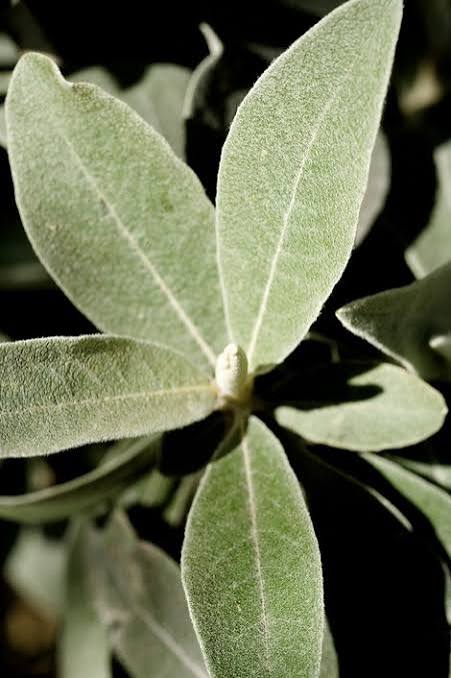
Leleshwa (Tarchonanthus camphoratus) is a hardy, evergreen shrub that grows wild across East Africa, from Kenya’s Rift Valley highlands south through Tanzania and into southern Africa. It goes by many names depending on where you are standing: camphor bush, African wild sage, vaalbos in Afrikaans, mikalambati in Swahili. In the Maasai dialect of Kenya, it has always been known simply as leleshwa, the name that has stuck in the natural health world.
The plant grows between two and nine meters tall, with silvery-grey leaves that have a distinctive felted texture on their undersides. Crush a single leaf between your fingers and the reason for every one of its names becomes immediately clear: a sharp, clean, camphoraceous scent floods the air. That aroma is not incidental. It is the whole point.
How It Was Discovered
The story of leleshwa as an insect and tick deterrent did not come from a laboratory. It came from the landscape itself.
For generations, Maasai communities used the aromatic leaves of the leleshwa plant as bedding material, spreading the crushed leaves in their sleeping areas and homes. The practice was understood to deter insects and promote restful sleep. They also rubbed the leaves onto the skin and used them as a natural deodorant.
The wildlife observation that eventually drew scientific attention was even more compelling. Researchers and naturalists in the regions where leleshwa grows noticed a consistent pattern: Cape buffalo, black rhinoceros, and other large animals would regularly seek out leleshwa shrubs and rub themselves against the branches and leaves. When these animals were observed more closely, those that had crushed the leaves onto their skin and coat appeared to carry significantly fewer ticks than animals that had not. Wildlife was self-medicating, and they had been doing it long before anyone with a clipboard arrived to take notes.
The first formal documentation of the plant in Western botanical literature appeared in the 1800s and early 1900s. A German botanist named Engler noted its use for wood by Usambara communities in Tanzania in 1895. Other European researchers writing between 1898 and 1908 referenced its medicinal and aromatic properties. The Italian researcher Paolo Rovesti presented findings on the essential oil composition at the International Congress of Industrial Chemistry in Paris in 1956, helping move the plant from ethnobotanical curiosity to something researchers began examining more seriously. A U.S. patent was eventually granted recognizing leleshwa and its derivatives for use in formulations with insect-repellent, anti-irritant, and soothing properties.
Why It Repels Ticks and Insects
The repellent action of leleshwa comes down to its chemical composition. When the leaves are steam-distilled into essential oil, the resulting profile is rich in terpene compounds including 1,8-cineole, alpha-pinene, fenchol, camphene, terpinen-4-ol, and alpha-terpineol. These are not exotic or mysterious compounds. Several of them appear repeatedly in the essential oil research literature as having measurable acaricidal and repellent activity against ticks and other ectoparasites.
Research on plant-based essential oils and tick repellency has identified camphor and alpha-pinene in particular as compounds associated with significant tick-repellent activity. The mechanism is not a contact kill in the way a pesticide works. Instead, these volatile compounds appear to interfere with the sensory receptors ticks use to locate a host, essentially making the environment on and around your dog less detectable and less attractive to a tick searching for a blood meal. Ticks find hosts through carbon dioxide, heat, and chemical signatures. A coat misted with leleshwa disrupts that search.
The key distinction worth understanding is that leleshwa, like all essential oil-based repellents, works primarily by deterrence rather than by killing. It is a discouragement, not an extermination. That matters as you think about how to use it within a broader prevention plan.
Leleshwa and Tick Prevention
Leleshwa is a great addition to our tick prevention strategy, however. it is one layer, not the whole plan. Tick checks after every outdoor outing remain non-negotiable regardless of what a dog is wearing or sprayed with. Habitat management, avoiding tall grass and wooded areas during peak tick season, checking gear and clothing, and monitoring the environment around your home are all part of the full plan.
For dog guardians who are committed to a lower-toxin lifestyle and want to move away from isoxazoline-class drugs or permethrin-based spot-ons, leleshwa gives you something to reach for. It has a centuries-long track record of traditional use, a chemical rationale for why it works, and a strong safety profile when used correctly and at appropriate dilutions.
Here is the recipe I use and recommend for a simple at-home leleshwa spray.
DIY Gentle Herbal Tick Spray for Dogs
What This Is
This simple botanical spray may help discourage ticks on healthy adult dogs during outdoor adventures. It is designed to be one layer of a comprehensive tick prevention plan.
What You’ll Need (8-ounce Bottle)
- 200 mL distilled water
- 25 mL alcohol-free witch hazel
- 5 mL fractionated coconut (MCT) oil
- 5 mL Solubol (or another natural essential oil dispersant)
- 3 drops leleshwa essential oil
- 1 drop cedarwood essential oil
Directions
- Add the Solubol and essential oils to an 8-ounce glass spray bottle and swirl gently to combine.
- Add the fractionated coconut oil and witch hazel.
- Fill the remainder of the bottle with distilled water.
- Close tightly and shake well before every use, as natural ingredients will separate over time.
How to Use
Dogs are incredibly sensitive to smells. Test every essential oil mixture first by placing it on a bandana and allowing your dog to sniff it. If your dog backs up or turns away, that is a no from your dog. If they want to sniff it, that is a yes, and you can move forward with placing the bandana around their neck and spraying the mixture on their coat.
Lightly mist your dog’s legs, chest, belly, and back before heading outdoors.
Avoid spraying the face, eyes, nose, mouth, ears, or any irritated skin. Instead, spray the product onto your hands or a soft cloth and gently wipe around the neck and shoulders if desired.
Reapply as needed after prolonged outdoor activity or after swimming or bathing.
After every walk, perform a thorough hands-on tick check from nose to tail. Prompt tick removal remains one of the most effective ways to reduce the risk of tick-borne disease.
Safety Notes
For dogs only. Do not use on cats.
Not recommended for:
- Puppies under 12 weeks of age
- Pregnant or nursing dogs
- Dogs with known essential oil sensitivities or significant skin disease
Do not allow your dog to ingest the spray, and store the bottle out of reach of children and pets in a cool, dark place.
My Layered Tick Prevention Philosophy
No single product, natural or conventional, can provide complete protection against ticks. I believe the safest and most effective approach is to layer multiple strategies together:
- Feed a fresh, species-appropriate diet to support a resilient dog.
- Use natural repellents like this spray when appropriate.
- Avoid heavy brush and tall grass whenever possible.
- Perform a careful tick check after every outdoor adventure.
- Remove attached ticks promptly with a proper tick removal tool.
It’s the combination of these simple habits, not any one product, that offers your dog the best protection while helping minimize unnecessary chemical exposure.
There is something I find deeply satisfying about a plant with this kind of track record. Wildlife self-medicated with it. Indigenous communities relied on it for centuries. Researchers eventually caught up. Leleshwa is not flashy, and it is not a cure-all, but it is grounded in real history and real chemistry. That is exactly the kind of tool I want in my toolkit, and in yours.
For more flea and tick guidance, check out my full flea and tick guide