
The thought of Lyme disease has many dog owners terrified.
One of the biggest issues with Lyme disease is that there are too many differences in opinion and treatment protocols amongst veterinarians. Some vets put the fear of God into dog owners, while others don’t make a big deal of it. Let’s dive in a see who is right, shall we?
What is Lyme Disease?
I’m going to go a bit deep on this because I want you to be armed with information. I believe that you, the dog guardian, deserve to be informed.
Pathogenesis:
Lyme disease is caused by the bacterium Borrelia burgdorferi (Bb). Uninfected tick (Ixodes spp) larvae feed on Borrelia-infected reservoir hosts, such as mice, squirrels, shrews, birds and lizards. The bacterium is then spread to dogs and humans through tick bites.
Approximately one third of these ticks carry this bacteria species. Therefore, if a tick bites your dog, it’s only 33% likely to be carrying the B. burgdorferi bacteria.
Deer are not hosts as you might think. They are, however, important sources of blood for ticks and are important to tick survival and movement to new areas. Deer are important for the maintenance, amplification, and spread of the tick population because adult ticks mate on them. Deer are not infected with Lyme disease bacteria and therefore, do not infect ticks.
Borrelia infection often occurs in the warmer months as a result of the behavior of ticks and the recreational habits of humans and their dogs. Late summer, nymphs molt to adults which feed on large mammals, preferentially deer, but also dogs and humans. Adult Ixodes ticks can be active in the fall, winter, and early spring when air temperatures exceed 40°F. With sufficient vegetation and abundant reservoir hosts, Bb‐infested ticks gradually will become established in an area.
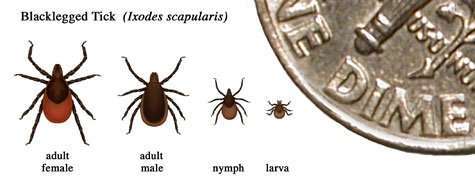
This species of ticks also spreads other infections such as Anaplasmosis and Ehrlichia (both of which are also tested using a 4DX snap test)
Cases of Lyme disease have been reported in nearly all states in the U.S. but the most common areas are the Northeast, upper Midwest and northwestern states.
These ticks must feed on your dog for an average of 24–48 hours in order to transmit the infection. Therefore, removing ticks quickly can prevent the spread.
Interesting Fact:
Swiss researcher Dr. Thomas Rau went to areas where Lyme disease was common and studied groups of farmers who were likely exposed to it.
80% of the farmers had Lyme disease, but of that 80%, only 2% showed any symptoms. Dr. Rau discovered that 100% of the people with full-blown Lyme symptoms had other viruses.
These viruses had already stressed the immune system prior to the Lyme exposure. We can surmise that this would also be true with dog infections. Your dog is more likely to develop symptoms of Lyme disease if there is a coinfection. Therefore, healthy dogs are unlikely to develop symptomatic infection.
How to Properly Test for Lyme Disease
A good first step is the 4DX test that is available in most veterinary offices. It is an antibody test and proves exposure to Lyme, not clinical infection.
If seropositive for Lyme, I next check the urine for protein.
If seropositive and protein is found in the urine, and the dog has clinical symptoms (lameness, fever, lethargy, anorexia) then I recommend a baseline quantitative C6. And I treat with antibiotics. I recheck the C6 test at 3 and 6 months to check for a decrease after treatment as an indicator of decreased antigenic load, and to establish a new baseline for future comparison, because qualitative tests may stay positive a long time after treatment.
If seropositive, NO symptoms and NO protein in the urine, then I do not start antibiotics. Instead, I recheck urine protein every 6 months for one year.
If seropositive, NO symptoms and protein is present in the urine, then I will recommend a further work-up to rule out other causes of proteinuria.
A little more about the C6 quantitative test- there is no published evidence that quantitative test results predict current illness, the potential for development of chronic disease, or differentiate reinfection from reactivation of a chronic infection. The presence of antibodies against C6 indicates exposure to Bb, but is not proof of cause of clinical signs, nor can it be used as a predictor for development of future clinical signs. Therefore, I only use this test if my patient is showing common symptoms of Lyme disease.
How likely is it that my dog will have symptoms?
Symptoms occur in approximately 5% of seropositive cases.
To be clear, this means that 95% of dogs bitten by a tick are likely to have either no symptoms or mild flu-like symptoms that resolve spontaneously.
In a study at the University of Pennsylvania, beagles were infected with Lyme and none of them developed clinical symptoms of Lyme disease.
These statistics show that the immune systems of seropositive dogs have mounted an appropriate, effective response. So even though they test positive, they do not become sick with the disease.
Why Do Some Dogs Get Symptoms?
Symptomatic infection always involves a coinfection or cofactor.
Important cofactors for Lyme disease include:
- Other bacterial infections
- Fungal infection
- Chronic inflammation
- Immune suppression
- Coinfections from other viruses
- Parasites
- Heavy metals and toxins
In this video, Dr. Rau describes the role of coinfection in Lyme Disease.
The most common symptoms seen in the 5% of dogs include:
- Shifting leg lameness
- Generalized pain, especially when ambulating
- Enlarged lymph nodes
- Fever
- Lack of appetite
In later stages, renal damage, cardiac arrhythmias, and CNS symptoms can occur. Renal damage occurs in less than 1-2% of seropositive cases.
Lyme nephritis can occur in a small percentage of affected dogs, and it is a serious, sometimes fatal condition. Although the exact causative mechanism has not been established, deposition of immune complexes in the kidney is thought to result in glomerular and tubular disease.
Steps to Prevent Lyme This Summer
 1. Decrease Ticks Through Landscaping
You can make your yard less attractive to ticks depending on how you landscape.
Here are some simple landscaping techniques that can help reduce tick populations:
- Clear tall grasses and brush around homes and at the edge of lawns.
- Place a 3-ft wide barrier of wood chips or gravel between lawns and wooded areas and around patios and play equipment. This will restrict tick migration into recreational areas.
- Mow the lawn frequently and rake the leaves.
- Stack wood neatly in a dry area to discourage rodents that ticks feed on.
2. Check your dog regularly, especially after being outdoors. Remember, it takes the tick 24–48 hours to infect your dog.
3. Use natural tick repellents. Check out my blog post about natural flea and tick repellents like citrus spray (pictured above) and why you should avoid toxic commercial pesticides.
4. Consider using a professional, organic pesticide company to apply pesticides in your yard.
5. Keep your dog’s immune system strong!
- Give a daily, high quality omega-3 such as green lipped mussel (Dr. Rau also found that all the patients in his study who reached Stage 3 Lyme had unbalanced fatty acid profiles)
- Feed whole food, fresh diet (avoid highly processed kibble and treats)
- Keep your dog at his/her ideal weight
- Exercise daily
- Avoid over-vaccination
- Avoid toxic commercial pesticides
- Provide plenty of filtered water
- Have your dog examined by your vet yearly or every 6 months if geriatric—include regular bloodwork and tick screening
* The more toxic your dog is, the more likely he/she is to suffer an exaggerated response to Lyme disease.
What About the Lyme Vaccine?
Those of you who know me know that I am convinced that over-vaccination is leading to shorter life spans and increases in chronic illnesses and immune mediated disease in dogs.
As an ER vet for over 20 years, I have had the unique perspective of treating the dogs who suffer from the negative effects of over-vaccination and toxic pesticides. They come to me 3–4 weeks after vaccination and are dying from immune mediated disease—many of these, dogs that are older and obviously protected against the diseases they are being vaccinated for…
The Lyme vaccine, in particular, is known to send the canine immune system into overdrive. This can trigger a number of serious secondary reactions, including autoimmune disease.
Dr. Rau also discovered that some vaccines were cofactors for Lyme disease. The human Lyme vaccine was pulled off the market due to reports of serious adverse events and because the vaccine may have caused Lyme-like arthritis. The vaccine was causing the actual symptoms it is supposed to protect against!
Yet despite these findings in human medicine, the dog vaccine remains on the market.
This is all enough evidence for me to not recommend this vaccine.
If you take precautions, you can safely enjoy the summer activities with your dog, despite the ticks.
Recap:
- Very few dogs who are Lyme positive develop clinical disease.
- Healthy, naturally reared dogs are less likely to become clinically infected.
- A lyme positive dog may remain positive.
- Test every 6–12 months for Lyme exposure.
- Prevention is key- Up the tick prevention game in a safe, non-toxic manner (including how to prevent their own exposure, as the dog is a sentinel)
- Put your natural tick preventatives in the car and by your dog’s leash, so you don’t forget to apply them before walks.
- Check your dog after every walk.
- Make your yard a tick-free zone.
- Pet your dog often, so you can check for ticks and he/she can get more lovin’ this summer!