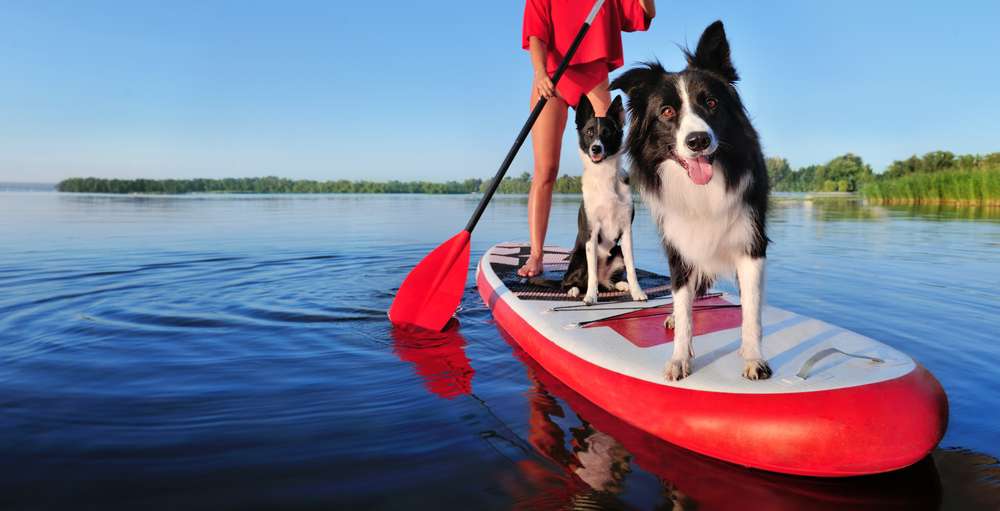

If you’ve ever seen a dog standing proudly on a paddleboard, ears flapping in the breeze, you know it’s pure joy in motion. It’s also one of my favorite summertime activities to share with my golden, Parker. We’ve had some of our best days out on the water together—me paddling, Parker surveying the water for fish and birds to chase.
It sounds amazing, but it’s not always that simple… paddle boarding with your dog isn’t just a matter of plopping them on the board and hoping for the best. Like any activity, it takes a little training, some safety prep, and a healthy dose of patience. Done right, it’s an incredible bonding experience that offers exercise, mental stimulation, and a shared adventure for you both.
Why Paddle Boarding Is Great for Dogs (and Their People)
Paddle boarding is a full-body workout for you and a sensory-rich experience for your dog. They get to take in new sights, smells, and sounds—all while staying close to you.
Benefits for dogs include:
- Physical exercise: Even standing and balancing on the board works their muscles. A day of paddle boarding also means time swimming, which is such a great exercise for both of you.
- Mental stimulation: New environments keep their brain engaged and curious.
- Confidence building: Learning a new skill boosts self-assurance in timid dogs.
- Bonding time: You’re literally in sync, reading each other’s cues and moving as a team.
And for you? You get the joy of sharing something active and peaceful with your dog—plus the bonus of a core workout without setting foot in a gym.

How to Train Your Dog for Paddle Boarding
The goal is to make the board feel safe, fun, and familiar before you ever hit the water.
- Start on dry land.
Place the paddleboard on a flat surface at home or in your yard. Let your dog sniff and explore at their own pace. Use treats to reward them for stepping onto it. You could even start feeding their meals on it to reinforce that the board means good things. - Teach a “board” cue.
Encourage your dog to get on and off the board using a simple command like “on” and “off.” Keep it positive and pressure-free. - Practice balance.
While still on land, rock the board gently side to side so your dog learns to adjust their stance. Praise and treat for staying calm. - Add your position.
Have your dog sit or stand on the board while you kneel or stand behind them with your paddle. This helps them get used to your movement. - Move to shallow water.
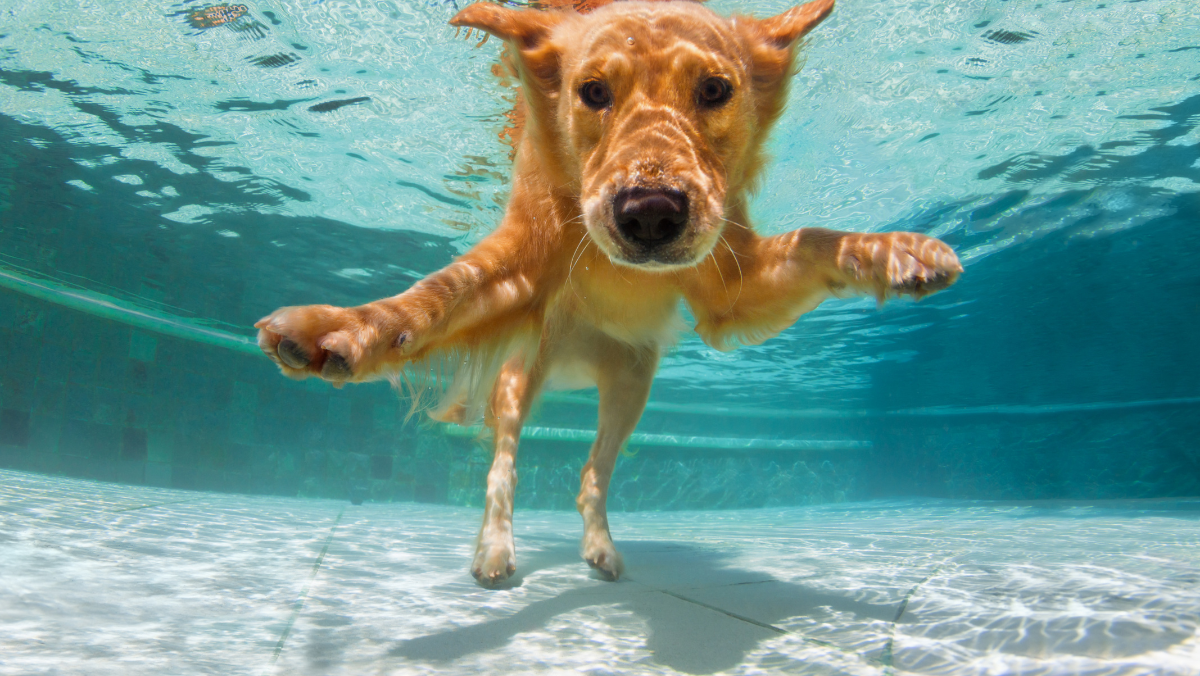
Once they’re comfortable on land, place the board in calm, shallow water. If you have a pool, this is a great place to start. Let them hop on, then reward heavily. Take short rides before working up to longer trips. - Keep first sessions short and stress-free.
Just like with any new skill, end on a high note. The goal is for your dog to think, “That was fun—let’s do it again!”
Safety Tips for Paddle Boarding With Your Dog
No matter how calm your dog or the water, safety always comes first.
- Use a dog life jacket. Even strong swimmers benefit from the extra buoyancy and a handle for lifting them back on the board.
- Check water conditions. Avoid choppy, windy days when balance will be harder for both of you.
- Protect their paws. Hot sand or docks can burn pads, so booties would be a great tool to bring along.
- Mind the sun. Dogs can overheat quickly. Bring fresh water, take breaks in the shade, and avoid midday heat.
- Watch for wildlife. Birds, fish, or other distractions can tempt your dog to leap off unexpectedly.
- Secure your essentials. Keep a waterproof bag with treats, water, a collapsible bowl, and your phone.
- Secure a tether to your dog. My dog loves leaping off the board for frequent swims, so I keep him on a long line. That way, if a boat passes, wildlife catches his eye, or he decides to “visit” other paddle boarders and kayakers, I can easily guide him back. Even with a strong recall, excitement can get the best of our dogs, and a lead offers that extra layer of safety and peace of mind.
Personal Lessons From Me and Parker
Parker hopped on the board our very first time, and we took off—never looking back. For us, it was easy, but that’s not always the case, and it shouldn’t be the expectation. Looking back, his easygoing nature and breed probably made it simpler for him to get the hang of it, but I’ve also seen plenty of dogs out on the water looking tense or unsure—clearly rushed into the activity without the preparation they needed.
That’s why it’s so important to read your dog’s body language and introduce them to the board in a way that feels safe and fear-free. Take it slow, reward generously, and keep early sessions short. Remember, this isn’t just about our enjoyment—it’s about making sure our dogs truly enjoy it, too.
Now, Parker practically runs onto the board the moment he sees me grab the paddle. Some of my favorite memories are of quiet evenings on glassy water, sunsets painting the sky purple, and Parker resting his chin on the edge of the board, eyes half-closed, tired from a day well spent.

Final Thoughts
Paddle boarding with your dog isn’t just about the ride—it’s about the trust, connection, and shared joy that comes with learning something new together. With a little training, a focus on safety, and a spirit of adventure, it can become one of your favorite summer traditions too.
Who knows—maybe I’ll see you and your dog out on the water this season. Parker will be the golden retriever in the life jacket, living his best life.
Written by Dr. Lynda Loudon
Founder of the Dog Mom Society
The Dog Mom Society
Want to feel more confident making health decisions for your dog — without second-guessing yourself at every turn?
Inside The Dog Mom Society, you’ll get the support, clarity, and expert guidance you need to navigate canine nutrition, holistic wellness, and behavior with confidence.
Plus, we’re here for you too — with women’s wellness resources to support your journey as a dog mom.
✨ Empower yourself. Support your dog. Find your community.