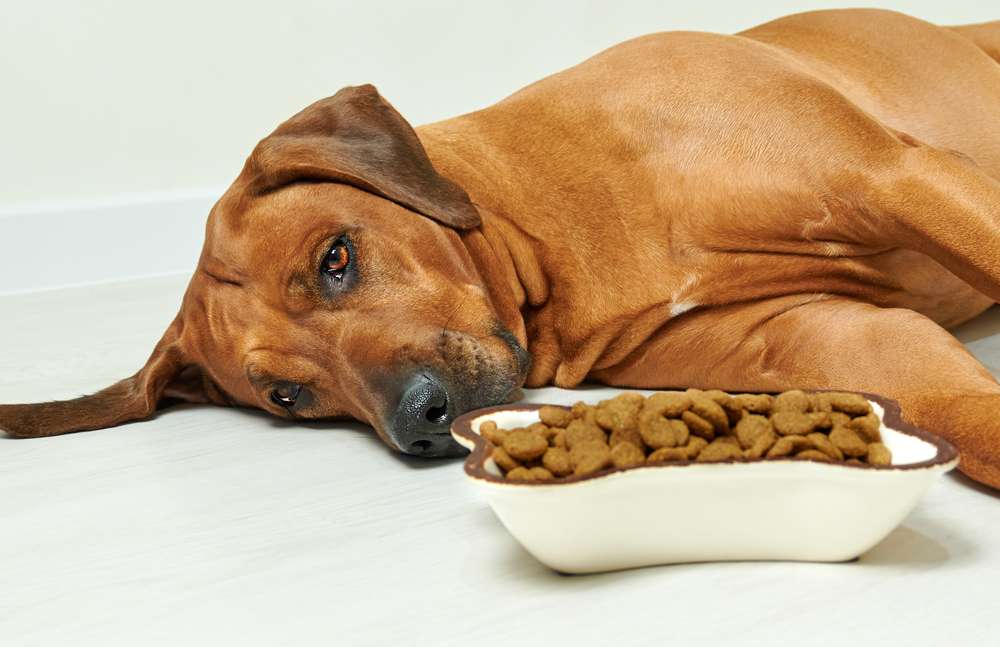

We often think of gut issues as chronic: loose stools here, a gurgly belly there, maybe a bout of picky eating. But when your dog suddenly spirals into vomiting, bloody diarrhea, or full-body lethargy, it’s a different story. Acute gut inflammation isn’t just stressful—it’s confusing. Especially when you’re told your only option is a prescription kibble and Metronidazole.
Let’s talk about what’s really going on in that inflamed gut, and how to calm the chaos—step by step—with real, nourishing food and a little guardian discernment.
Step One: Stabilize the Storm
When inflammation hits, the gut lining becomes damaged and hyper-reactive. The first 24–72 hours are about supporting the body, not overwhelming it. That means:
- Pulling back on rich or varied foods
- Offering small, frequent meals of a bland, anti-inflammatory base: I typically recommend cooked lean turkey or cod, paired with canned organic pumpkin or lightly steamed summer squash—not rice. (I know rice is tradition, but it’s nutrient-poor and not the easiest to digest for most dogs.)
- Supporting hydration: bone broth (without onion) and electrolyte solutions can help prevent dehydration.
Step Two: Support True Gut Healing in Dogs

Once the acute inflammation has stabilized (typically within 24–72 hours), the priority should shift from mere symptom suppression to true mucosal repair and immune balance. This means nourishing the gut lining, supporting microbiota restoration, and avoiding ultra-processed interventions that may stall long-term healing.
What the Research Says About Gut Healing in Dogs
The canine gastrointestinal tract is a dynamic immune and microbial interface. During inflammation, the gut lining becomes damaged, permeability increases (known as “leaky gut”), and immune reactivity rises. Supporting recovery means aiding mucosal regeneration, microbial rebalance, and immune tolerance—not just reducing visible symptoms.
1. Whole Food Diets Aid Recovery
“Diets based on whole ingredients, including lean meats and specific fibers, help modulate inflammation and restore intestinal permeability.”
- Lauten, S.D. (2006). Nutritional management of gastrointestinal disease. Clinical Techniques in Small Animal Practice, 21(3), 126–134.
https://doi.org/10.1053/j.ctsap.2006.07.007
This research supports incorporating lean proteins like turkey or cod and soluble fiber from pumpkin or squash during recovery. These foods help maintain mucosal hydration, improve nutrient absorption, and avoid triggering excessive fermentation or immune reactions.
2. Hydrolyzed Diets May Suppress Symptoms—But Don’t Heal
“Hydrolyzed protein diets can reduce clinical signs but do not significantly improve gut microbiota diversity or mucosal regeneration.”
- Cerquetella, M. et al. (2010). Inflammatory bowel disease in the dog: differences and similarities with humans. World Journal of Gastroenterology, 16(9), 1050–1056.
https://www.ncbi.nlm.nih.gov/pmc/articles/PMC2842524/
These diets reduce immune recognition of proteins but fail to restore long-term gut health. Healing requires re-establishing a diverse and resilient microbiome, not just masking symptoms with sterile, denatured food particles.
3. Immune Tolerance is Built, Not Avoided
“Excluding dietary proteins during inflammation may delay tolerance development… Appropriate reintroduction supports immune adaptation.”
- German, A.J., Hall, E.J., & Day, M.J. (2003). Immune cell trafficking and cytokine expression in canine chronic enteropathies. Journal of Veterinary Internal Medicine, 17(3), 291–302.
https://doi.org/10.1111/j.1939-1676.2003.tb02445.x
This directly challenges the common fear that introducing protein during inflammation causes a permanent allergy. In fact, carefully reintroducing whole foods after initial stabilization supports oral tolerance and immune normalization.
Functional Additions to Support Gut Healing
- L-glutamine: An amino acid that fuels enterocyte regeneration and supports tight junctions.
- Slippery elm bark or marshmallow root: Plant mucilages that form a soothing barrier over irritated mucosa.
- Soluble fiber: From pumpkin or chicory, to support beneficial microbial fermentation.
- Fish oil (EPA/DHA): To reduce intestinal inflammation via prostaglandin modulation.
Why Overprocessing Backfires
Hydrolyzed diets are ultra-processed and lack the bioactive compounds—enzymes, cofactors, and polyphenols—essential to mucosal recovery. Digestive resilience comes not from sterile foods, but from gentle, species-appropriate nourishment introduced after inflammation subsides.
Rather than fearing whole food proteins, the real concern should be chronic inflammation and microbial imbalance. Support healing with simple, digestible real food that aligns with the dog’s biology, and reintroduce variety once symptoms stabilize. Suppression may offer short-term comfort, but true recovery depends on repair, not retreat.
Step Three: Food Trial > Allergy Test
Despite what many pet owners are told, commercial food allergy tests—whether based on blood, saliva, or hair—are not reliable diagnostic tools for identifying true food sensitivities in dogs. Multiple peer-reviewed studies have demonstrated that these tests frequently yield false positives, false negatives, or even respond to inert substances. They measure immune reactivity, which doesn’t always reflect actual symptoms.
That said, I sometimes use these tests as a preliminary baseline—a loose map to guide early decisions, especially when guardians feel overwhelmed or we’re navigating multiple possible triggers. But they should never be used in isolation. The real insight comes from watching your dog’s response over time, not from a lab marker.
Why Allergy Tests Aren’t Definitive
Here’s what most tests don’t tell you:
- They measure immune response, not necessarily what’s causing real-world symptoms.
- False positives and negatives are common. Your dog may test reactive to a food they tolerate well—or pass a food that causes symptoms.
- Hair and saliva tests often reflect exposure, not intolerance. This can lead to unnecessary restriction or missed culprits.
In short: tests can help you get your bearings, but your dog’s lived experience is the compass.
Nutrition: Building a Balanced Trial Diet

Phase 1: Acute Recovery (2 Weeks)
Start with a single, simple protein (e.g., cooked turkey or cod) and a low-reactivity vegetable (e.g., canned pumpkin or lightly steamed squash). Keep the diet bland, consistent, and nutrient-light for the first 10–14 days to reduce inflammation.
Phase 2: Balancing the Diet (Weeks 3–12)
If you’re continuing the food trial for a full 8–12 weeks, it’s critical to transition to a more nutritionally complete diet while maintaining ingredient consistency.
You can:
- Add raw meaty bones or bone meal, organs (liver/kidney), and key fats and micronutrients to build a DIY balanced meal.
- Or, switch to a commercial gently cooked or raw diet that uses the same single protein you’ve already introduced.
Only return to raw feeding at this stage if your dog was previously on raw and did well. A recovering gut may not tolerate raw initially, so cook when in doubt.
Brands I recommend for single-protein, gently cooked diets:
- Goodness Gracious Rabbit
- Raised Right Pork & Pumpkin Pâté
- AllProvide Gently Cooked Turkey
Remedies That Help Calm an Inflamed Gut
1. Soothe the Gut Lining
- GastroElm Plus: Soothing, mucilaginous coating for acute flare-ups
- Mix 1 tbsp with 4 oz water/broth, let gel, refrigerate up to 1 week
- Dose: ½ ml per lb body weight, twice daily, 30–60 minutes before meals
- Chamomile Tea: Soothes gut and nervous system
- Dose: 1–2 tsp cooled tea per 10 lbs, or 1 dropperful of glycerite tincture twice daily
2. Repopulate and Balance the Microbiome
- Saccharomyces boulardii (e.g., AnimalBiome S. boulardii + FOS): Excellent for diarrhea and post-antibiotic support
- FMT (Fecal Microbiota Transplant): Use DoggyBiome Gut Restore as a 30-day protocol for chronic dysbiosis
- Daily Probiotic Routine:
- Start: Adored Beast “Love Bugs”
- Rotate: Green Juju or other high-quality brands every 4–6 weeks
- Add: Raw goat’s milk (natural probiotic)
3. Feed the Gut Flora (Prebiotics)
- Psyllium Husk (plain, unsweetened only):
- Small (<20 lbs): ½ tsp
- Medium (20–50 lbs): 1 tsp
- Large (50–90 lbs): 2 tsp
- Giant (>90 lbs): 1 tbsp
- Mix with food + water/broth; increase or taper based on stool consistency
4. Support Detox + Liver Function
- Milk Thistle (700–900 mg/day of silymarin): Use liquid extract or Adored Beast Liver Tonic
- Give with food and monitor for energy improvements or detox signs
5. Anti-Inflammatory Reinforcements
- PEA (Palmitoylethanolamide): Begin 2 weeks after flare stabilizes. Helps modulate inflammation without side effects
- Omega-3s (EPA + DHA): Start 5 days after PEA
- Begin with 1,500–2,000 mg/day; increase to 2,500 mg/day
- Cold-pressed fish oil or 4–5 sardines/day works well
6. Medicinal Mushrooms
- Start 5 days after Omega-3s
- Look for a blend like 5 Defenders (Turkey Tail, Reishi, Maitake, Shiitake, Chaga)
- Daily use supports immune modulation and long-term gut resilience
7. Natural Anti-Nausea Options
- Ginger (grated fresh, glycerite, or capsule)
- Dose: 10–20 mg/lb, 2–3 times per day
Final Thoughts: Healing Takes Time
Gut healing isn’t linear—and it certainly isn’t fast. But it is possible when we work with the body, not against it.
Your job isn’t to suppress symptoms—it’s to create conditions for repair:
Summary: Your 6-Phase Gut Healing Roadmap
- Stabilize the Storm: Use bland, anti-inflammatory foods and hydration
- Support Mucosal Healing: Focus on repair, not restriction
- Use Food Trials, Not Just Tests: Observation is more powerful than a lab result
- Layer in Functional Supports: Mucosal healing, microbiome rebalance, detox
- Reintroduce Slowly and Intentionally: Track and respond—not react
With the right tools and mindset, you’re not just managing symptoms—you’re restoring balance.
Written by Dr. Lynda Loudon
Founder of the Dog Mom Society