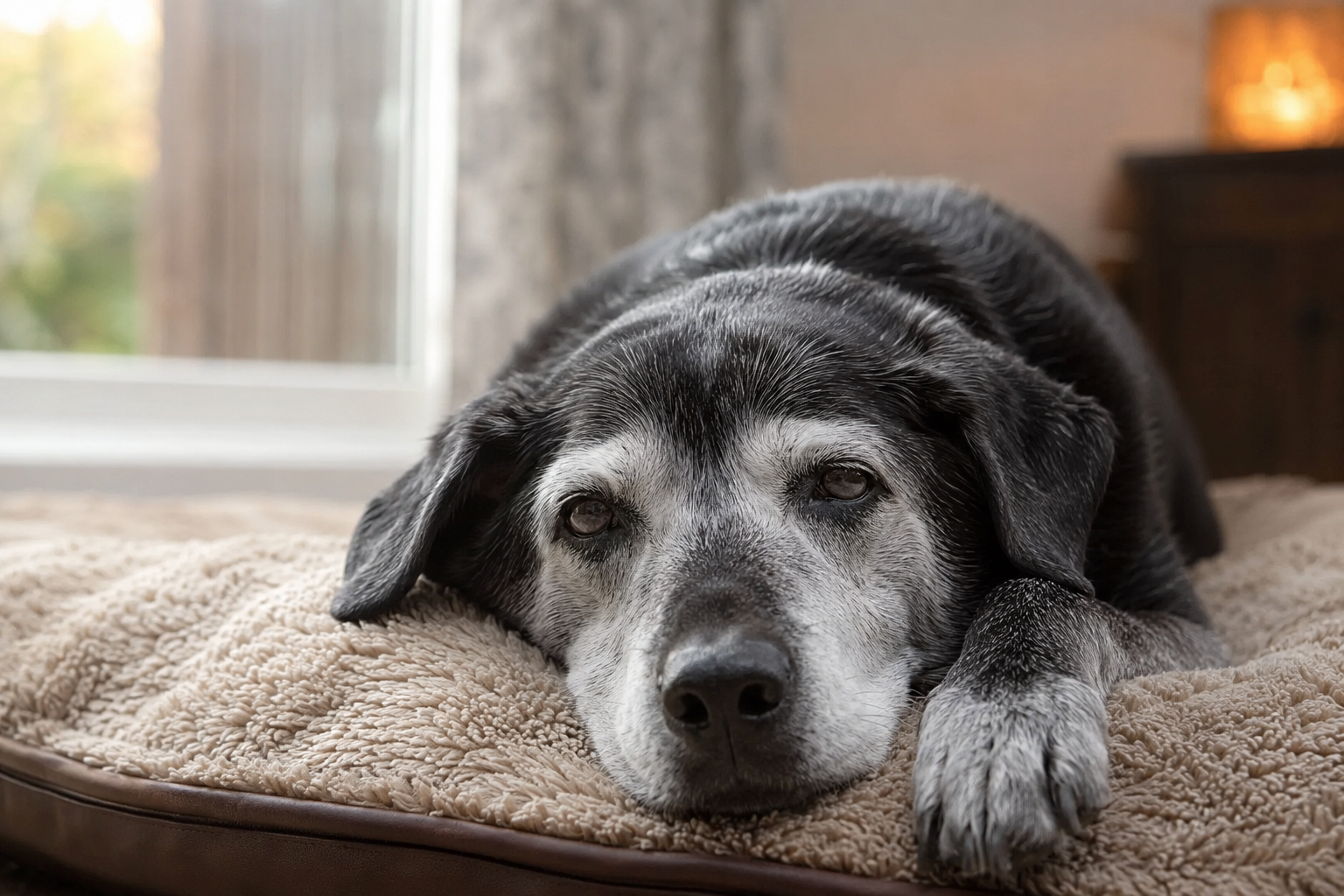

A dog mom calls my ER at 2 am. Her dog was fine at dinner. By midnight, he was vomiting. Then the diarrhea came with blood in it. Then he stopped wanting to get up. This is one of the most common scenarios I hear as an emergency vet.
Blood in the stool can be very alarming, and it is always a sign that the gut lining is very inflamed. In this blog, we’ll discuss what is actually happening inside your dog’s gut, what each symptom is telling you, what the blood itself means, and the simple first steps that help while you get your dog seen.
What Counts as a Gut Flare
A gut flare is a sudden spike in inflammation inside the digestive tract, not the slow, low-grade stuff like occasional loose stool or a dog with “a sensitive stomach.” It shows up fast, and it shows up together: vomiting, diarrhea, a sudden drop in appetite, lethargy, and sometimes blood.
What sets a flare apart is how fast it comes on. Chronic gut issues build over weeks. A flare arrives within a day, sometimes within a few hours, and that speed is why it feels so alarming.
Why Dogs’ Guts Flare Up
The lining of your dog’s intestine works nonstop. It absorbs nutrients, holds back whatever shouldn’t cross into the bloodstream, and stays in constant contact with the immune system sitting just underneath it. A large share of your dog’s immune system lives along that gut lining, which is why gut health and immune health are the same conversation.
When something disrupts that lining, it becomes inflamed, and the normally tight seal between the gut and the bloodstream loosens. Vets call this increased intestinal permeability. Most people call it leaky gut. Once that seal loosens, the immune system underneath starts reacting to things it would usually ignore, and that reaction is what you see on the outside.
The most common triggers I see in the ER:
- Dietary indiscretion. Table scraps, trash, something found on a walk. This is the single most common cause.
- A new food introduced too fast, even a good one.
- Stress. Boarding, travel, a new pet, a thunderstorm. Stress acts directly on the gut.
- A viral or bacterial infection, including parasites like giardia.
- A recent course of antibiotics, which can disrupt the gut’s bacterial balance on its way to treating something else.
- Toxin or foreign material ingestion, which sometimes needs more than dietary support to resolve.
None of these causes are rare. Most flares come from something ordinary that happened to land on a gut that was already a little off balance.
What Each Symptom Is Telling You
Each symptom tells you something different, and reading them together tells you more than any one symptom alone.
Vomiting
Vomiting means the upper gut, the stomach, and the first part of the small intestine, is irritated enough to reject what’s in it. Occasional vomiting with a dog who is otherwise acting normal is common and can be a chronic symptom that needs investigation. Repeated vomiting, or vomiting paired with any of the symptoms below, is not normal and needs immediate action.
Diarrhea
Diarrhea means the intestines have lost their ability to absorb water properly and are moving everything through too fast for the body to pull nutrients and fluid back out. This is where dehydration becomes the real danger, especially in small dogs, puppies, and seniors.
Lethargy and Appetite Loss
Lethargy means the body is pulling energy away from everything else to fight the inflammation. Appetite loss often travels with it. A dog who skips one meal but is still alert and playful is different from a dog who won’t lift his head. The second one needs a vet, now.
Blood in the Stool: What It Is Telling You
Blood is the symptom that scares every dog mom I talk to, and it should get your attention. Not all blood means the same thing, and the color is diagnostic.
Bright red blood, fresh and visible on the surface of the stool, usually points to the lower colon or rectum. This is called hematochezia, and it is the most common kind I see. It is associated with colitis, acute stress, dietary indiscretion, or a flare that is confined to the lower gut.
Dark, tarry, almost black stool is a different signal entirely. This is called melena, and it means blood has been digested on its way through from higher up in the gastrointestinal tract. Melena is the kind that should move you faster, not slower, because it often points to a more serious source of bleeding.
One specific pattern is worth noting here. A sudden, severe episode of bright red, often jam-like bloody diarrhea in an otherwise healthy dog, often a small or toy breed and sometimes linked to stress, has its own name: acute hemorrhagic diarrhea syndrome, sometimes still called by its older name, hemorrhagic gastroenteritis. It looks terrifying because of how much blood can appear and how fast it comes on. It needs same-day veterinary care, often including IV fluids, and most dogs recover fully within a day or two of the right treatment.
Blood in the stool, of either kind, most often means the gut lining is inflamed enough to bleed, and it is always worth a same-day call to your vet.
When Blood Means Emergency
Go now: this is an emergency: repeated vomiting that won’t stop, a large amount of blood, black tarry stool, a puppy or unvaccinated dog with vomiting and bloody diarrhea, known or possible ingestion of rat bait or another toxin, or a dog who is weak, collapsed, has pale gums, or seems disoriented.
Call today: blood you can see on or in the stool, vomiting or diarrhea that has gone on more than a day, or a dog who isn’t eating or drinking.
Monitor closely: a single episode of soft stool with a streak of blood in an otherwise bright, eating, drinking dog can sometimes be watched for a few hours before you call. If it happens a second time, call. Trust the pattern more than any single moment.
It does not always mean a 911-level emergency. It always means it is time to pay attention.
Simple First Steps You Can Take at Home
Once your vet has ruled out anything dangerous, or while you’re waiting for that call back, here is what helps a flared gut settle. These are the basics, not the whole plan, but they make a difference in the first 24 to 48 hours.
- Rest the gut. Give the gastrointestinal tract at least 6-8 hours after a bout of diarrhea or vomiting to rest without offering food.
- Pull back to simple food. Small, frequent meals of a bland, easy-to-digest protein like plain cooked chicken or white fish, with canned plain pumpkin for fiber for the first few days.
- Protect hydration. Offer water often and in small amounts. A dehydrated gut heals slower than a hydrated one. A canine product bone broth can be offered to help encourage drinking.
- Rest, don’t push. Skip the long walk and the dog park until the stool has been normal for a full day.
These four steps calm most ordinary flares. What they don’t do is rebuild the gut lining underneath, tell you how to reintroduce food without triggering it again, or tell you whether the microbiome needs more active support. That part takes more than four steps, and it is where most dog moms get stuck.
Frequently Asked Questions
How long does a dog’s gut flare usually last? Most uncomplicated flares start improving within 24 to 48 hours and resolve within a few days. If your dog isn’t clearly improving by 48 hours, or seems to be getting worse, that is a reason to be seen rather than to wait it out.
Should I withhold food if my dog has bloody diarrhea? Not for more than a few hours. The old advice to fast a sick dog for a day or two has fallen out of favor. A gut that is actively healing generally does better with small, frequent, bland meals than with no food at all.
Is blood in dog poop always an emergency? No, but it is always worth a same-day call to your vet. A single streak of bright red blood in an otherwise bright, active dog is treated differently than repeated episodes, a large volume of blood, or a dog who also seems weak or is not eating.
Can stress alone cause bloody diarrhea in dogs? Yes. Boarding, travel, a new pet in the house, or a stressful event can trigger a sometimes dramatic bloody gut flare with no infection or dietary cause involved. The gut and the nervous system are directly connected, and a stressed dog is a dog whose gut is more vulnerable.
Get the Full Recovery Protocol
The four steps above calm the flare. They are not the full plan for healing the gut lining, finding the real trigger without guessing, or rebuilding the microbiome so this doesn’t become a repeating pattern.
The full protocol, the exact foods and the order to introduce them, the supplements I use and the doses, and how to run a real food trial, and which food sensitivity tests are worth doing, is a resource inside my protocol section of my Dog Mom Society.
If that would be helpful, you’re welcome to join us there